Art That Made Leaders Look Handsome When They Werent

A painted woods carving by an unidentified internee depicts the Heart Mountain Relocation Center in Wyoming. It is showcased in The Art Of Gaman, a new showroom curated by Delphine Hirasuna and currently on brandish at Smithsonian's Renwick Gallery in Washington, D.C. Photograph: Terry Heffernan/Japanese American Museum of San Jose hibernate caption
toggle caption
Photograph: Terry Heffernan/Japanese American Museum of San Jose
When the Japanese attacked Pearl Harbor in 1941, the U.Due south. government took action at home. People of Japanese ancestry living on the West Declension were forcibly removed from their homes and taken to desolate inland areas of the U.Due south. Some 120,000 men, women and children were placed in internment camps for the duration of World War II.

Ansel Adams/Library of Congress

In Washington, D.C, the Smithsonian's Renwick Gallery is exhibiting art and other objects created in those camps -- a grim however handsome reminder of a nighttime chapter of American history.
'Nosotros Had No Furniture'
Norman Mineta grew upwardly in San Jose, Calif., the son of Japanese immigrants. He went on to serve in Congress and eventually became commerce secretary nether Bill Clinton, and transportation secretary under George West. Bush.
Mineta still has vivid childhood memories of his internment at the Heart Mountain Relocation Center in Wyoming. He was 11 years old when his family was relocated to hastily congenital, blank barracks.
"We had no furniture," Mineta recalls. "All you get is four blank walls and i light seedling in the middle of the room and a black potbellied stove over in the corner ... and cots. That was information technology."

Bird and creature pins made of scrap wood, paint and metal, past Himeko Fukuhara and Kazuko Matsumoto, interned at Army camp Amache, Colo., and Gila River, Ariz. Photo: Terry Heffernan hide caption
toggle explanation
Photo: Terry Heffernan
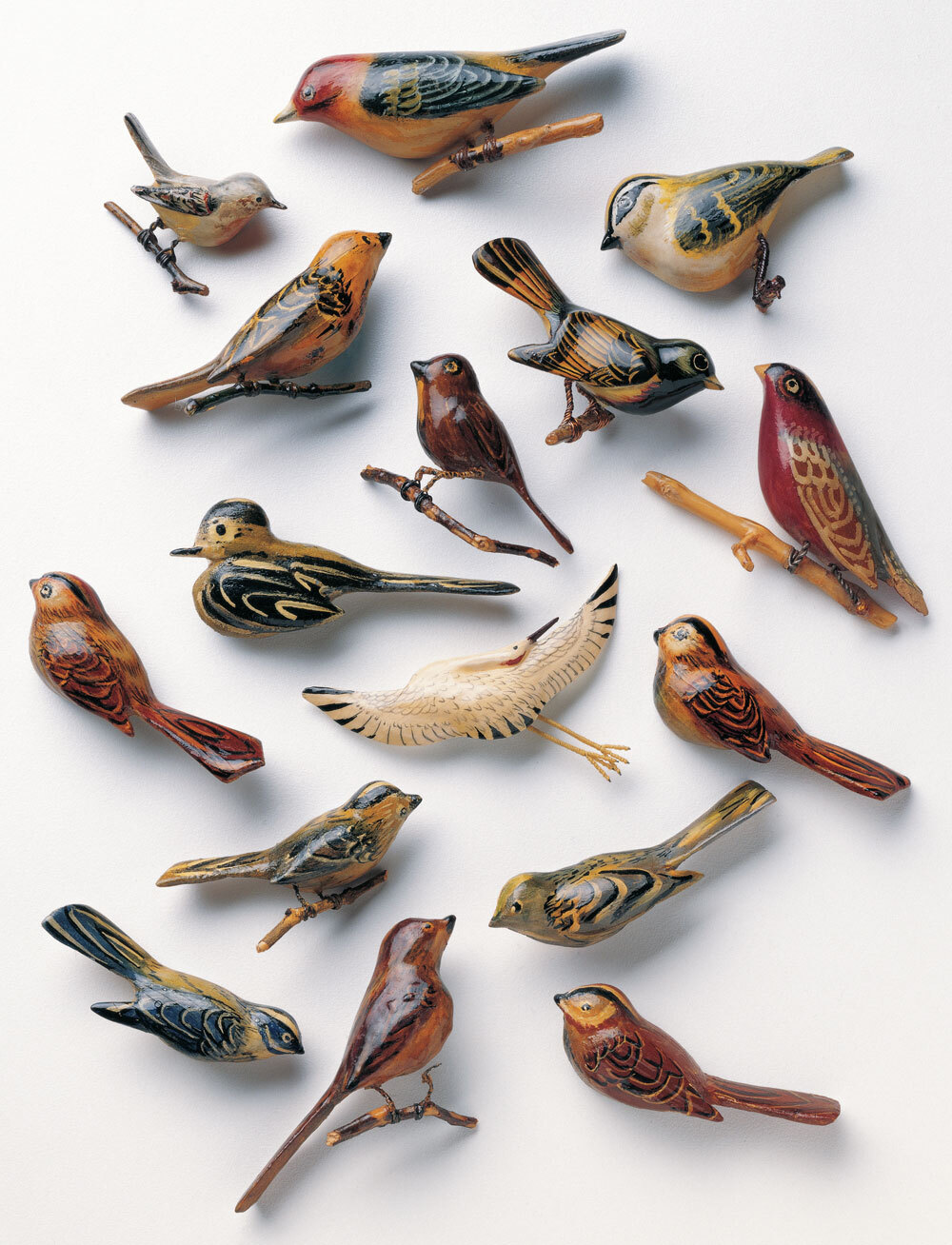
Bird and animal pins made of bit wood, paint and metal, by Himeko Fukuhara and Kazuko Matsumoto, interned at Camp Amache, Colo., and Gila River, Ariz.
Photo: Terry Heffernan
And so, in all x of the internment camps, people began making what they needed with whatever materials they could observe. Chip lumber became chairs, tables, dressers. Establish metal became knives (they weren't allowed to bring abrupt objects into the camps). And for fun, chip woods was carved into pocket-sized, painted birds.
Delphine Hirasuna, a 3rd-generation Japanese-American, was organizing family holding later on her mother's death and found a bird pivot that belonged to her mother, stashed away in an old wooden box in the garage. Lacquered, with shades of chocolate-brown and yellowish -- it was this pin that inspired the exhibit at the Renwick.
Hirasuna found many other trinkets from her family's time in internment, and began asking around for other camp-made objects. She began going house to house in California farm country.
"When I asked them if they had anything, they would go into their sheds ... and they would haul out this dusty box," Hirasuna says. "And the items in the box would still be wrapped in paper from 1945. So it was pretty obvious to me that they never looked at it when they brought it dorsum from camp."
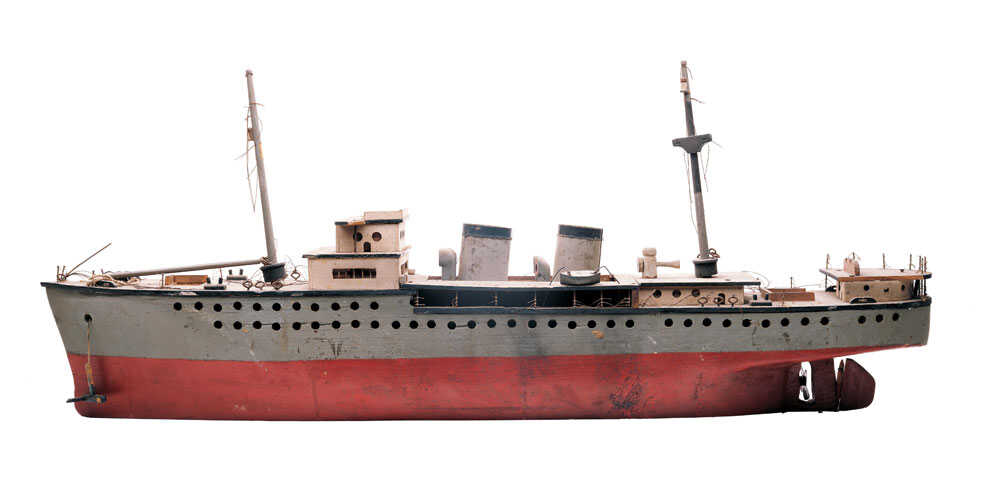
A model ship made of forest, scrap metal, wire, thread, paint screws and nails by an unidentified internee in Jerome, Ark. Photo: Terry Heffernan/National Japanese American Historical Order hide caption
toggle caption
Photo: Terry Heffernan/National Japanese American Historical Club

A model transport made of wood, scrap metal, wire, thread, paint screws and nails past an unidentified internee in Jerome, Ark.
Photo: Terry Heffernan/National Japanese American Historical Society
Looking Like The Enemy
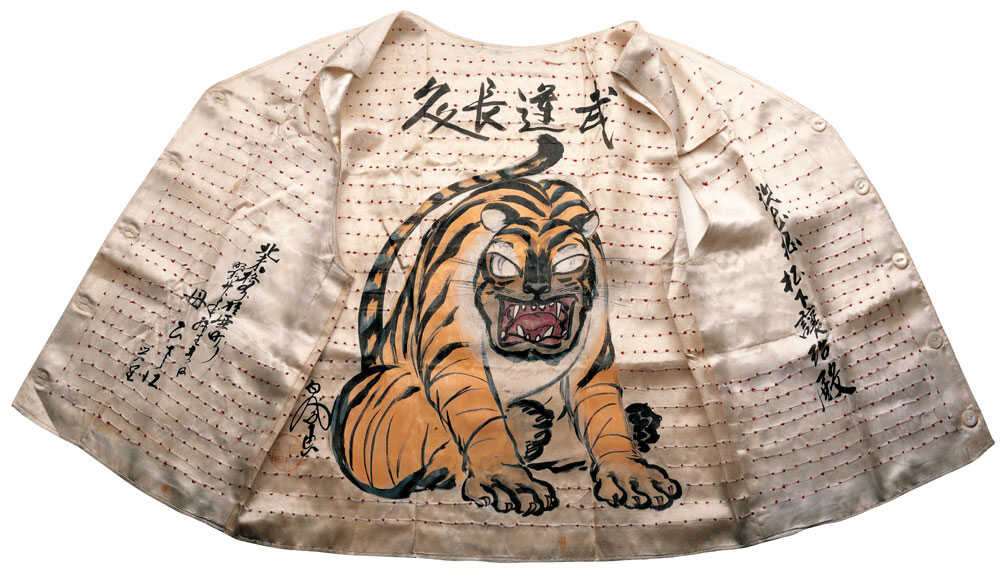
A Senninbari vest made of silk textile, thread, ink, buttons and paint, made by the mother of George Matsushita, while she was interned at the Amache camp in Colorado. There are one,000 French-tied knots on the vest -- each tied by a different person in the camp. Photo: Terry Heffernan/Japanese American Archival Drove Library hibernate caption
toggle caption
Photo: Terry Heffernan/Japanese American Archival Collection Library

A Senninbari vest made of silk cloth, thread, ink, buttons and paint, made by the mother of George Matsushita, while she was interned at the Amache camp in Colorado. There are i,000 French-tied knots on the vest -- each tied by a different person in the camp.
Photo: Terry Heffernan/Japanese American Archival Collection Library
A painted wooden etching of the Center Mountain barracks, a model ship crafted of forest, wire and string, a carved and polished Buddhist shrine are all on display at The Art of Gaman exhibit at the Renwick gallery.
From the Amache internment military camp in Colorado came a silk belong a mother made for her son who was going off to war. (Eventually, some of the internees were drafted or even volunteered for a special combat unit of U.S.-born Japanese-Americans.) The cream-colored vest is decorated with i,000 red, French-tied knots.
"One person made each knot," explains Robyn Kennedy, master of the Renwick. "This was passed around in the military camp, and this was in order to provide strength and skilful luck for the person it was given to."
On the back of the vest a ferocious tiger is painted in orange and black ink. His hunched shoulders and precipitous teeth show his force.
"No one is going to go through that tiger to get this person's dorsum," Kennedy says.
Information technology'south ironic that people of Japanese ancestry could fight and die for America, but in those postal service-Pearl Harbor days, they were also seen as a potential threat. They looked similar the enemy. Families were told they were relocated for their own protection, but even at age 11, that made Norman Mineta wonder.
"You have baby-sit towers every [200], 300 feet all around the military camp with barbed wire, holding us in," he says. "You look up and you wonder: If we're in here for our protection, why are those machine guns pointing at us?"

A puzzle made of wood, paint and shellac by Kametaro Matsumoto, while interned at Minidoka, Idaho. Photograph: Terry Heffernan/Collection of Alice Ando and Jean Matsumoto hide caption
toggle caption
Photo: Terry Heffernan/Drove of Alice Ando and Jean Matsumoto
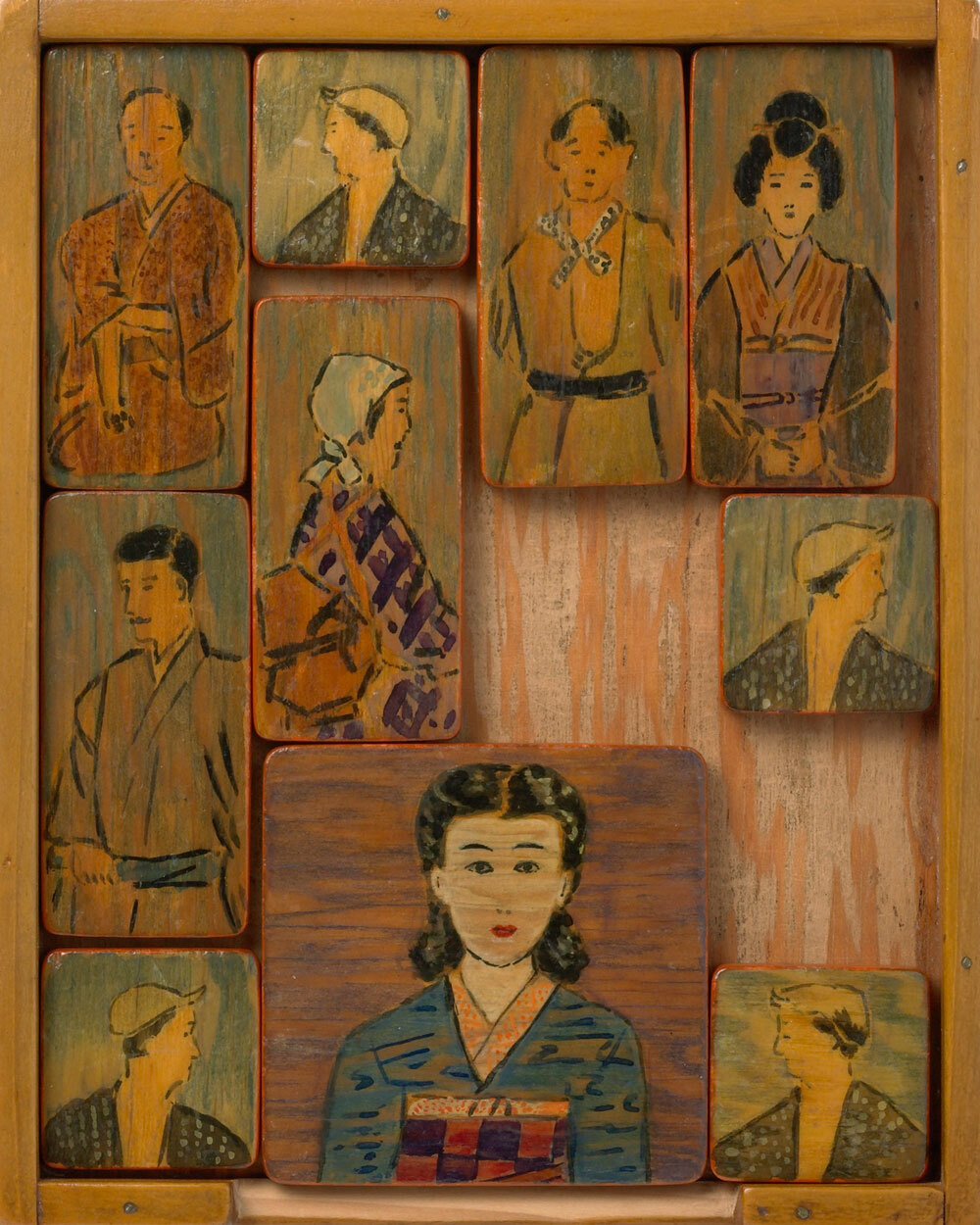
A puzzle fabricated of woods, pigment and shellac by Kametaro Matsumoto, while interned at Minidoka, Idaho.
Photo: Terry Heffernan/Collection of Alice Ando and Jean Matsumoto
'With Patience And Dignity'
The Art of Gaman showroom provides hit visual evidence of how internees coped -- fashioning, by hand, arts and crafts that enhanced their difficult days.
"Gaman means to bear the seemingly unbearable with patience and nobility," Hirasuna explains.
She began piece of work on her picture and history book -- besides called The Fine art of Gaman -- non long after Sept. 11, 2001. She says she is inspired past the mode internees discovered their creative talent.
"It makes me wonder what we, all of u.s.a., accept in ourselves," Hirasuna says. "Could we create things of beauty like that in adversity in such a situation?"
There were a few professional artists in the camps -- some of the internees had been illustrators for Disney. Simply most of the people in the camps had not created art or crafts before their internment -- and never did again. They went dorsum to being doctors, dentists, farmers, store owners.
To Hirasuna, their acts of creativity are also acts of courage -- "the repose courage of people who are put in the worst circumstances, and they find it in themselves to rise in a higher place information technology and make things that are truly cute."
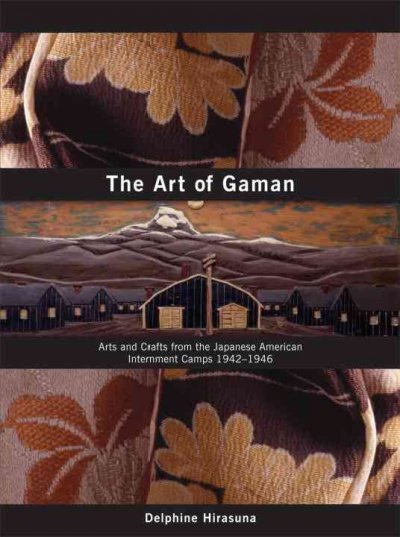
The Art of Gaman
Arts & Crafts from the Japanese American Internment Camps 1942-1946
Hardcover, 128 pages |
purchase
Purchase Featured Book
Your buy helps support NPR programming. How?
- Contained Booksellers
smithworactagoine.blogspot.com
Source: https://www.npr.org/templates/story/story.php?storyId=126557553
0 Response to "Art That Made Leaders Look Handsome When They Werent"
Post a Comment